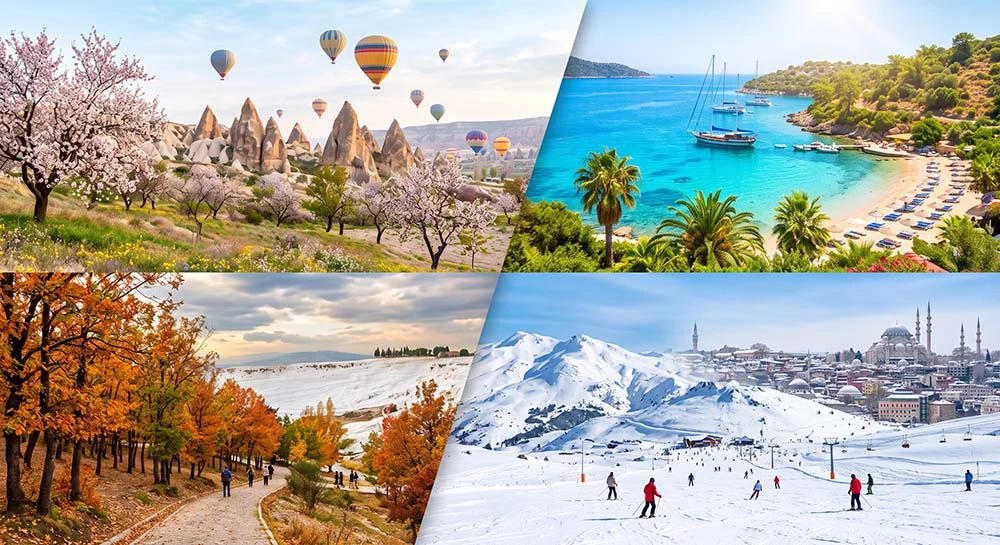
Ask ten seasoned travellers when to visit Turkey and you will hear ten different answers, most of them partly right. Turkey is a large country with several distinct climates: a humid, green Black Sea north, a continental high plateau at its heart, and long Aegean and Mediterranean coastlines that stay warm well into autumn. The right month depends less on the calendar and more on what you want your journey to hold: long days on the water, cool mornings among ruins, a balloon rising over snow, or a city that feels entirely your own.
This guide walks through the year the way we plan it for our guests at Tolga Travel Atelier, region by region and month by month, so you can choose the season that suits your journey rather than the one that suits the crowds.
What Is the Best Time to Visit Turkey?
For most travellers combining Istanbul, Cappadocia and the coast, the most rewarding windows are mid April to mid June and mid September to early November. Temperatures are comfortable for walking, the light is soft for photography, the sea is warm enough to swim from late May and usually stays that way through October, and the major sites are noticeably calmer than in July and August.
That said, every month has something to offer. A well-designed private itinerary can turn the so-called low season into the highlight of your trip. As a quick reference:
- Best overall: late April to early June, and late September to October
- Best for the beach and yachting: June to mid October
- Best for Cappadocia balloon flights: April to June and September to November, although balloons fly year round when conditions allow
- Best for quiet museums and city life: November to March
- Best for hiking the Lycian Way: March to May, and October to November
How Does the Weather Differ Across Turkey?
Istanbul has a temperate climate with warm, humid summers and cool, damp winters; snow falls in some years but rarely lasts. Cappadocia sits on the Anatolian plateau at more than 1,000 metres above sea level, so its summers are dry and bright with cool evenings, while its winters are genuinely cold and often snowy. The Aegean region around Ephesus and Pamukkale becomes very hot in July and August, and the Mediterranean coast around Antalya enjoys one of the longest warm seasons in the region.
Planning a journey across several regions therefore means balancing these climates rather than chasing perfect weather everywhere at once. The order of your stops matters as much as the month you choose.
Why Do So Many Travellers Choose Spring (March to May)?
March is a month of contrasts. Istanbul can still be cool and changeable, but the city is quiet and the first blossoms appear in its parks. On the coast, March is ideal for walking sections of the Lycian Way, and the archaeological sites of Ephesus and Hierapolis are wonderfully uncrowded.
April is one of Istanbul’s most beautiful months. Millions of tulips fill the city’s parks and gardens during the annual tulip festival, with Emirgan Park among the loveliest settings above the Bosphorus. In Cappadocia the valleys turn green, the air is clear, and balloon conditions are often excellent. European Easter and school holidays can bring more visitors in some weeks, so we plan the most popular visits for early mornings.
May is close to perfect across the country. Istanbul is warm without the humidity of summer, the water is at its most inviting for a private Bosphorus cruise, and the Aegean and Mediterranean are ready for the first swims by the end of the month. If you want to combine culture and coast in a single journey, late May is hard to improve on.
Is Summer (June to August) Too Hot to Travel in Turkey?
June brings long days and settled weather. It is an excellent month for pairing Istanbul with Cappadocia, where mornings are fresh and evenings cool, and the coast is at its most beautiful before the peak crowds arrive.
July and August are the hottest and busiest months of the year. Istanbul can feel humid, and inland Aegean sites such as Ephesus and Pamukkale become very hot by late morning. None of this means you should avoid summer; it means the journey should be designed around it. We start sightseeing early, keep transfers in air-conditioned vehicles, plan long lunches in the heat of the day, choose quieter days to visit Ephesus when fewer cruise ships call at Kuşadası, and save the evenings for the Bosphorus or the sea. Summer is also the natural season for a private yacht along the Turquoise Coast, which we arrange through our VIP Mobility service.
A note on Pamukkale: the white travertine terraces are walked barefoot, and in high summer their surface reflects the sun intensely. In July and August we recommend visiting in the first hours after opening or in the late afternoon, when the light over the pools is also at its most beautiful.
Is Autumn (September to November) the Best Season of All?
September is, for many of our returning guests, the finest month in Turkey. The sea is at its warmest, the summer crowds thin once European schools return, and the heat eases on the Aegean. It is an ideal month for a longer itinerary such as the 9 Nights Grand Turkey journey, moving between Istanbul, Cappadocia, Ephesus and the coast.
October offers golden light, the grape harvest in Cappadocia’s vineyards and comfortable temperatures for exploring ancient cities on foot. On the Mediterranean coast around Antalya, swimming often remains pleasant throughout the month, and a private escape on the Antalya coast feels calm and unhurried.
November is when the pace slows. Istanbul settles into its cosy season of tea houses, Bosphorus fish restaurants and long museum afternoons. Cappadocia turns crisp and quiet, and balloon mornings above the autumn valleys can be spectacular. It is an excellent month for travellers who value space and calm over sunshine.
Is Turkey Worth Visiting in Winter (December to February)?
Winter is Turkey’s most underrated season. Istanbul in December, January and February is cool, sometimes rainy and occasionally snowy, but it is also the city at its most authentic. Queues at Hagia Sophia and Topkapı Palace are shorter, many restaurants are filled mainly with locals, and a private guide can show you the Old City at a truly unhurried pace.
Cappadocia under snow is one of the most beautiful sights in the country. Fairy chimneys dusted in white, balloons rising above silent valleys and evenings by the fire in a cave suite make for an unforgettable winter journey, such as our Cappadocia Wonderland itinerary. Nights fall well below freezing, so warm clothing is essential, and balloon flights are more often postponed for weather, which is why we build extra flexibility into winter plans.
The coast is quiet in winter and many seaside hotels close for the season, but the ancient cities of the Aegean and the Lycian shore can be explored in near solitude on bright winter days.
When Is the Best Time for a Cappadocia Balloon Flight?
Balloons fly throughout the year, but every flight depends on the morning’s wind and visibility and on daily approval from the aviation authorities. Spring and autumn usually offer the most reliable conditions, with calm dawns and comfortable temperatures. Summer flights are frequent but in high demand, so booking early matters. In winter, flights are cancelled more often, although the snowy landscape richly rewards those who do fly.
Whatever the season, we recommend at least two nights in Cappadocia, so a second morning is available if the first flight does not go ahead.
How Do Religious Holidays and Ramadan Affect Travel in Turkey?
Turkey’s two major religious holidays, the Ramadan Feast and the Feast of the Sacrifice, follow the lunar calendar and move about eleven days earlier each year. During these holidays many Turkish families travel, so domestic flights, coastal resorts and highways become busier, and some offices and markets close for part of the period. The Grand Bazaar, which is already closed on Sundays, usually closes for the first days of each religious holiday as well.
Travelling during the month of Ramadan itself is easy and often rewarding. Museums and historic sites operate for visitors, most restaurants in the areas you will visit remain open, and the evening atmosphere around the mosques of the Old City, as families gather to break the fast, is something many guests remember most. We check the exact dates for your travel year and plan around them.
How Should You Plan Your Trip Around the Seasons?
The best time to visit Turkey is ultimately the time that fits your journey. A few principles make any season work:
- Plan by region, not only by month. In spring, begin in Istanbul and end on the coast; in autumn, consider reversing the order to follow the warmth.
- Build in flexibility for Cappadocia, especially between November and March.
- Reserve peak months early. Private guides, boutique cave hotels and yachts for June to September are often booked months in advance.
- Let the heat shape the day, not the itinerary. Early starts and long lunches make even August comfortable.
Planning Your Private Journey with Tolga Travel Atelier
Every itinerary we design begins with your dates, your pace and what you hope to feel on the journey. Tolga has personally guided travellers across Turkey since 1998, and that experience shows in the small decisions that make a season work: which morning to visit Ephesus, which valley to walk when the wind rises, which Bosphorus table to reserve at sunset.
If you are considering a private journey through Turkey, explore our destinations or get in touch to start shaping your trip. Tell us when you would like to travel, and we will show you how to make the most of that season.